When parents first step into a Montessori environment, one of the most striking differences they notice is the role of the adult. What, exactly, is the role of a Montessori teacher? How does it differ so fundamentally from traditional educational models?
To understand the Montessori educator, it is often helpful to begin with what they are not. A Montessori teacher is not an instructor lecturing from the front of the room, distributing identical information to every child at the same time. Instead, they act as a gentle guide—connecting children to the environment, providing precise tools for discovery, and then stepping back to let natural curiosity take over.
As Dr. Maria Montessori famously noted:
"The greatest sign of success for a teacher... is to be able to say, 'The children are now working as if I did not exist.'"
Here is a closer look at how Montessori Guides cultivate independence, scientific observation, and long-term growth within our school community.
1. Preparing the Environment to Cultivate Independence
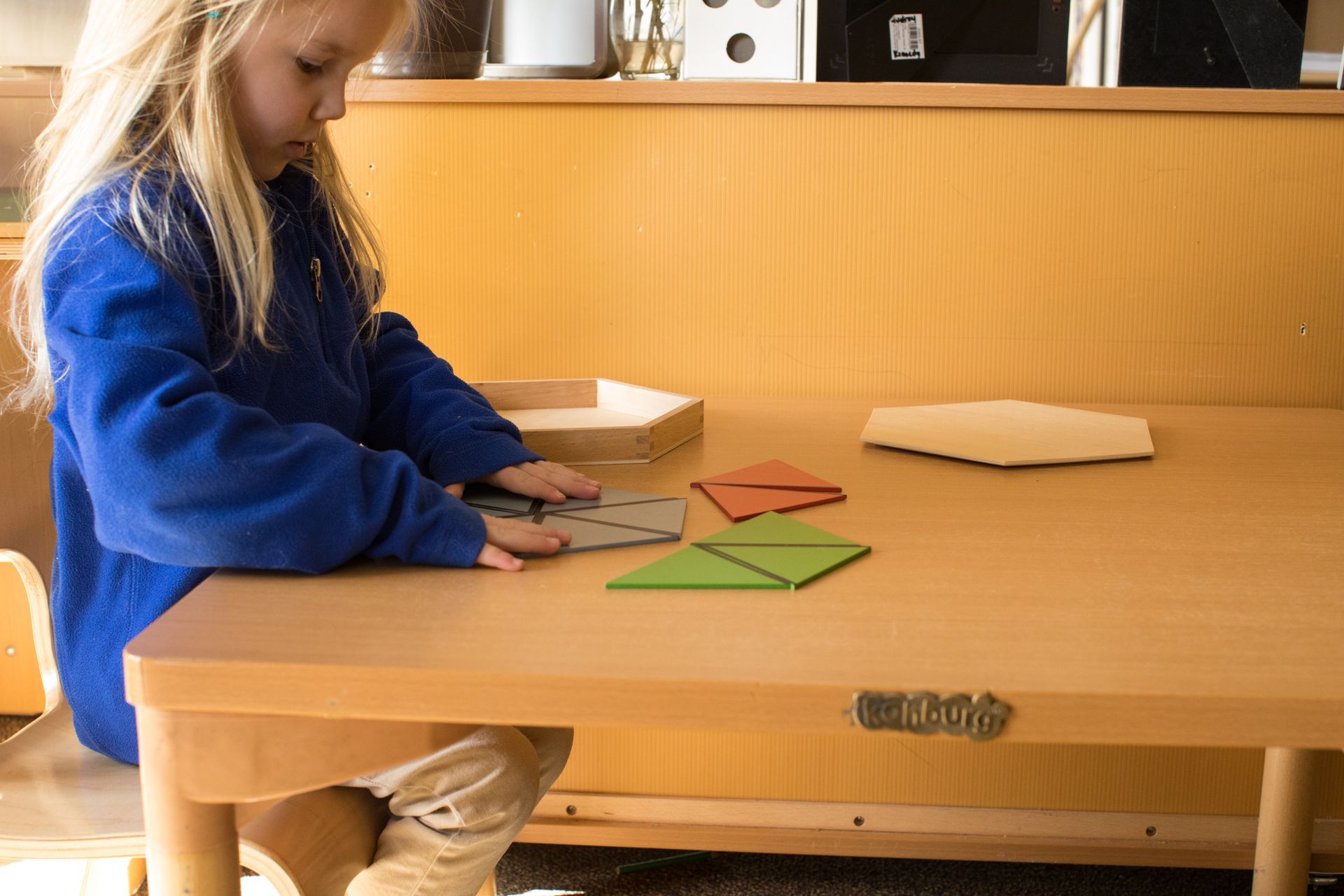
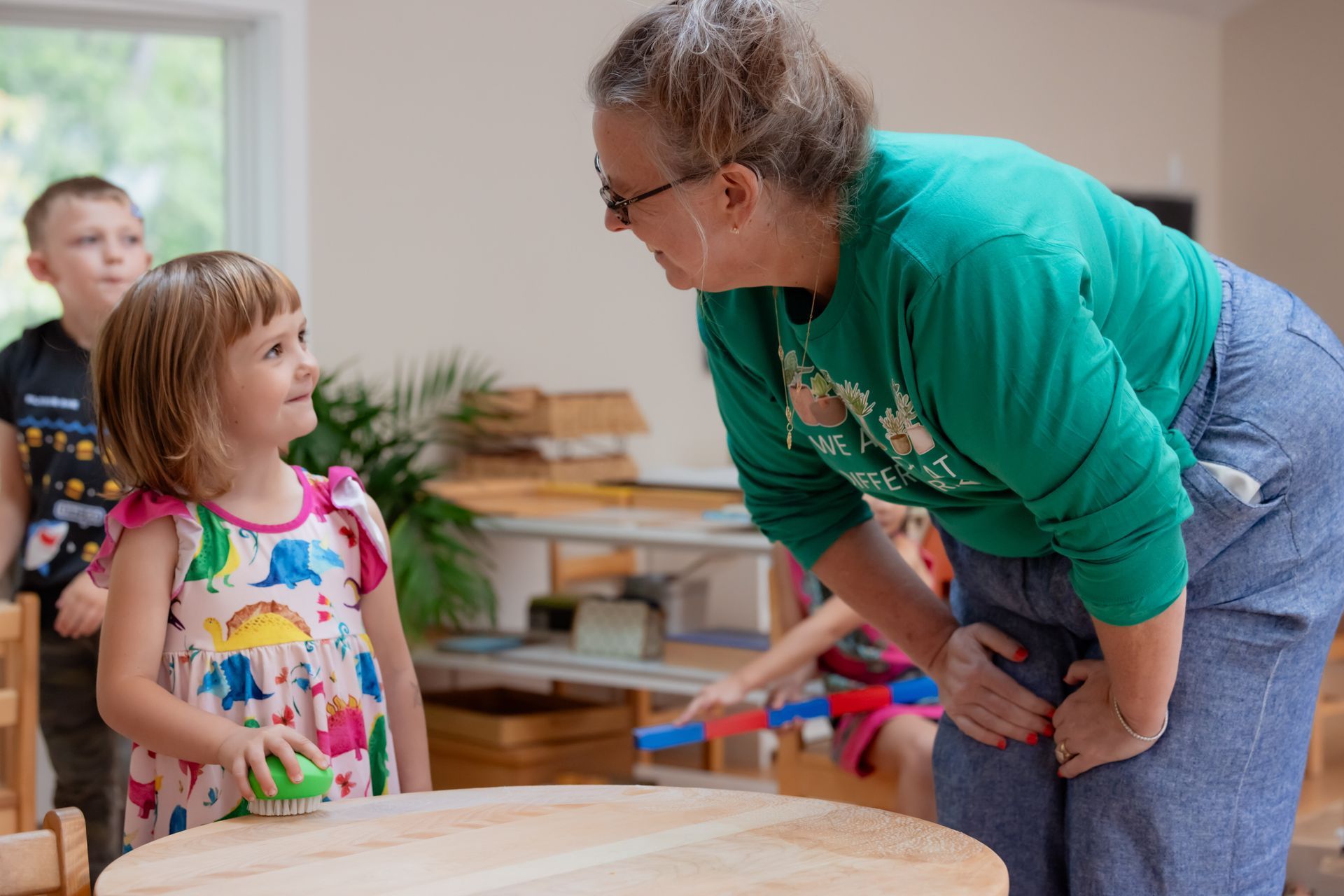
In a Montessori classroom, you won't see a centralized teacher's desk or a chalkboard aimed at rows of identical seating. Instead, you will find a Guide sitting on the floor or at a low table, presenting a lesson to an individual child or a small group. Meanwhile, the rest of the children move purposefully through the room, engaged in self-chosen, meaningful work.
A primary responsibility of the Guide is the continuous preparation of the classroom environment. They carefully curate a space that is:
- Developmentally aligned: Tailored to the physical and cognitive needs of the age group.
- Sensorial and inviting: Beautiful, clean, and organized to inspire independent choice.
- Dynamically adjusted: Continuously subtle shifts are made based on the evolving interests and developmental stages of the children.
By structuring the environment with care, the Guide creates a safe, predictable framework where children learn to trust themselves as capable, self-directed learners.
2. Trained to Think like Scientific Observers
Montessori Guides are highly trained professionals. In addition to undergraduate degrees, they undergo rigorous, specialized Montessori credentialing programs. These intensive training programs cover child development theory, philosophy, human tendencies, and precise movement analysis alongside the master-level presentation of materials.
Rather than relying on standardized testing or worksheets to gauge progress, Montessori Guides utilize continuous, detailed scientific observation:
- Detailed Record-Keeping: Guides maintain comprehensive observational records documenting what materials a child chooses, their level of repetition and concentration, areas needing support, and emerging readiness for new lessons.
- Individualized Assessment: By sitting directly alongside a child, a Guide gains a precise understanding of their mastery across practical life, language, mathematics, geometry, and the sciences.
- Anticipating Next Steps: Observation allows the Guide to prepare the exact next presentation at the moment the child is developmentally ready to receive it.
3. Honouring Long-Term Development (The Three-Year Cycle)
Because Montessori classrooms are structured around multi-age, three-year developmental cycles (Ages 3–6 in Primary, Ages 6–9 in Lower Elementary, and Ages 9–12 in Upper Elementary), Guides have the unique privilege of holding a long-term view of each child's growth.
This three-year relationship allows the Guide to:
- Know each child's unique learning style, strengths, and personality deeply.
- Partner with families over an extended period to support the whole child.
- Allow learning to happen at its natural pace, eliminating artificial timelines or peer competition.
4. Guiding Freedom Within Limits
Montessori Guides are often described as "connectors." Their role is to connect the child to the prepared environment, to high-level concepts, and to social harmony through "freedom within limits."
While children have broad freedom to choose their work, move around the room, and manage their time, the Guide provides the necessary boundaries that keep the community safe, respectful, and productive.
Partners in Your Child's Journey
Montessori Guides deeply value intrinsic motivation, self-reliance, and intellectual curiosity. Equally, they cherish kindness, cooperation, and community stewardship. They do not teach children what to think, but rather give them the tools, confidence, and freedom to learn how to think.
We invite you to reach out to our team at Chesterbrook Montessori School to
schedule an observation. Watching a trained Guide navigate a bustling, peaceful classroom is the very best way to see the beauty of this approach in action.