As we prepare for the start of the new school year, families often ask us how they can foster independence and meaningful responsibilities at home. One wonderful and deeply rewarding way to integrate Montessori principles into your home environment is through the care of family pets.
In our classrooms at Chesterbrook Montessori School, pets are often an integral part of the community. When children have daily contact with the natural world—especially through caring for living creatures—they develop a profound reverence for life in all its forms.
Furthermore, as children learn to independently care for themselves, applying those same practical life skills to an animal builds self-control, executive function, and genuine responsibility. Becoming aware of and attuned to another being’s needs directly supports the development of empathy and compassion.
“Children have an anxious concern for living beings, and therefore the satisfaction of this instinct fills them with delight. It is therefore easy to interest them in taking care of plants and especially of animals. Nothing awakens foresight in a small child, who lives as a rule for the passing moment and without care for the morrow, so much as this.”
— Dr. Maria Montessori, The Discovery of the Child
Starting with Daily Care
If you have pets at home, encouraging your child to participate in their daily feeding and watering routine is a perfect starting point. Even toddlers can take on a role here with the right environmental setup!
The key to success is preparation: having the correct amount of food prepared in an easy-to-dispense container accessible to your child.
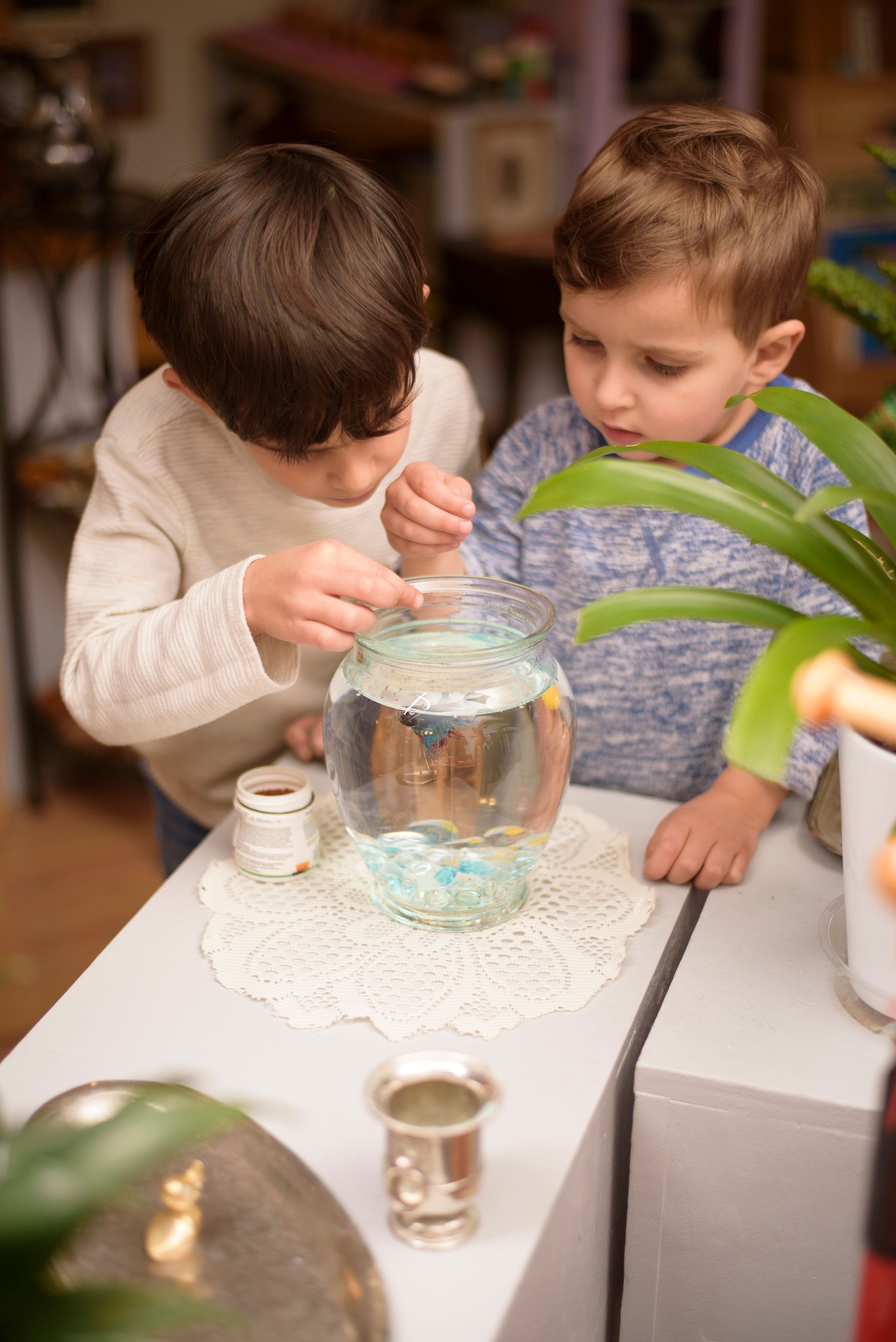
- Fish or small habitats: A small dish with a pre-measured portion of food allows your child to independently transfer food into the aquarium or habitat.
- Cats and dogs: Keep a single portion of dry food in a small, accessible container or pitcher that your child can carry and pour into the food dish. For wet food, provide a child-sized spoon or scoop.
- Hydration: Provide a child-sized pitcher or measuring cup that holds just the right amount of water needed to refill a bowl or water bottle without overflowing.
Break it Down: Preparing the Environment
To help your child succeed, take a moment to look at the process from their physical perspective and anticipate any obstacles:
- Can they open the food container without assistance?
- Is the water source easy for them to reach?
- Is the reach into the habitat comfortable and safe?
Once you have set up child-friendly materials, demonstrate the steps clearly and slowly. For younger children, keep the sequence short. A simple visual chart (a laminated picture showing a morning feed and an evening feed) placed at eye level helps them track their routine. Older children might enjoy using a dry-erase marker to check off their daily responsibilities on a family checklist.
Cleaning, Grooming, and Maintenance
Practical life skills naturally extend into maintaining a pet’s environment. Learning can build incrementally over time:
- Light care: A child might start by misting a terrarium or wiping down the mat under a food bowl.
- Scrubbing and sweeping: Over time, they can learn to sweep up spilled kibble, wash food dishes at the sink, or help rinse out a habitat basin.
- Grooming: Children love the tactile experience of brushing a dog or cat. Bathing a pet can also be a shared task, where a child helps scoop water or hold the towel.
As children master small tasks, taking ownership of larger parts of the process builds authentic self-confidence.
Interacting, Playing, and Grace & Courtesy
Caring for an animal offers children daily practice in reading non-verbal cues and anticipating needs. In learning to approach pets gently and quietly, children practice Grace and Courtesy—skills that naturally transfer to their interactions with peers, siblings, and adults.
You can also involve your child in creative problem-solving and research:
- DIY Pet Toys: Children can make yarn pulls for birds, string toys for cats, or recycle cardboard tubes for small rodents to chew.
- Dog Walking & Training: Older children can assist on walks, research healthy treat recipes, or help teach basic commands using positive reinforcement.
- Pet Research: Having non-fiction books available about your specific pet’s species sparks natural curiosity about animal behavior, habitats, and nutrition.
Growing Together This School Year
Ultimately, children find immense joy in being needed. Contributing to the care of a beloved family pet strengthens their connection to the living world while laying a strong foundation for independence and self-reliance as they step into the new school year.
If you would like inspiration or guidance on setting up pet care or practical life routines at home, please reach out to your classroom guide! We are always happy to share how we incorporate living things into our prepared environments at Chesterbrook.