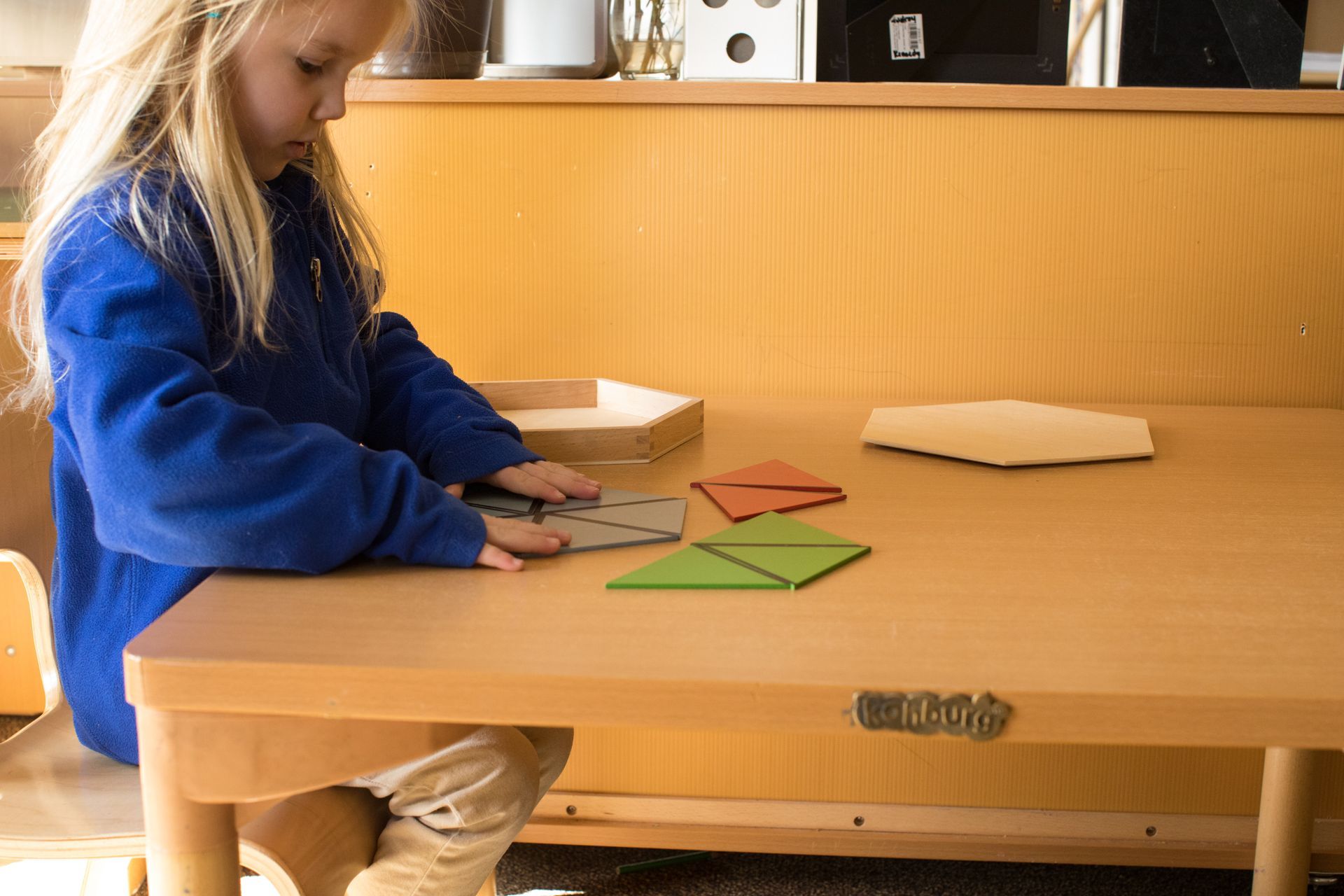
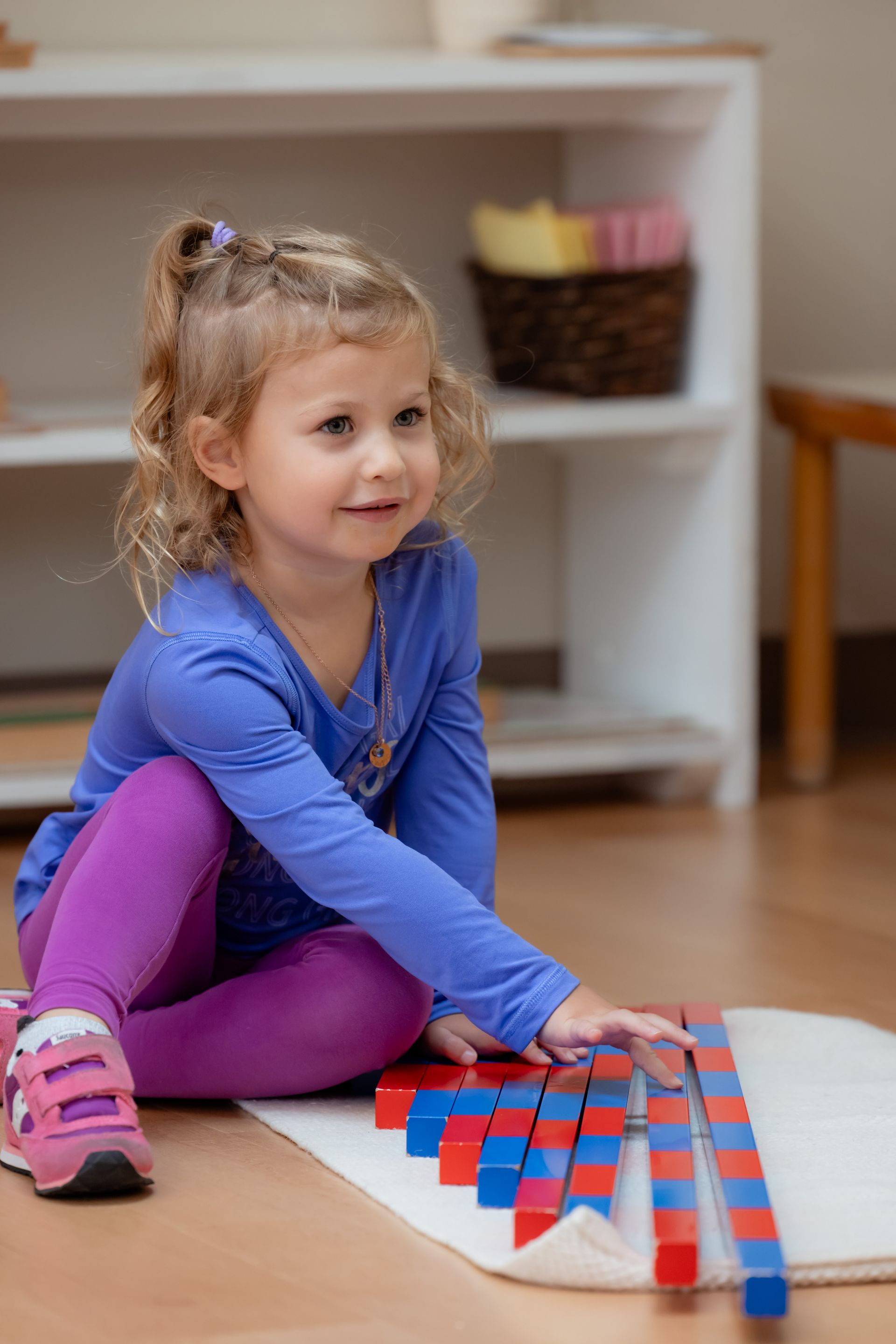
Unlike other species that are born with a predetermined set of behaviors, human babies are born with infinite potential. When a child is born, we cannot predict if they will become a master musician, a creative chef, a compassionate teacher, or an innovative engineer. It is a breathtaking concept: children are continuously creating the physical, emotional, and cognitive skills they need to become contributing adults.
Dr. Maria Montessori observed children through a careful, scientific lens. Over time, she concluded that this creative self-construction could only happen through a mind that operates in a fundamentally different way from the conscious adult mind.
In The Absorbent Mind, Dr. Montessori writes:
"The child has other powers than ours, and the creation he achieves is no small one; it is everything. Not only does he create his language, but he shapes the organs that enable him to frame the words. He has to make the physical basis of every movement, all the elements of our intellect, everything the human being is blessed with. This wonderful work is not the product of conscious intention."
Long before modern neuroimaging confirmed how rapidly neural pathways form in early childhood, Dr. Montessori recognized this unique mental functioning and termed it the Absorbent Mind.
What Does "Absorbent" Really Mean?
Dr. Montessori chose her words deliberately. "Absorbent" implies taking something in and integrating it entirely into the whole. What is absorbed does not merely sit in the memory—it becomes part of the person doing the absorbing.
During the first plane of development (birth to age six), children absorb their surroundings effortlessly and indiscriminately:
"Impressions do not merely enter his mind; they form it. They incarnate themselves in him. The child creates his own 'mental muscles,' using for this what he finds in the world about him."
This absorbent mind is the child's greatest superpower. They take in language, social cues, emotional tones, spatial relationships, and movement patterns—building the very framework of their intellect and personality without conscious effort.
The Power of Adult Example
Because children under six absorb everything in their environment, our adult actions speak far louder than our words. The Absorbent Mind does not filter out what we wish children wouldn't notice; it absorbs everything equally.
- If we want children to speak with calm, gentle voices, we must use calm, quiet tones when addressing them.
- If we want children to sit down while eating, we must sit down while eating.
- If we want children to handle materials with care and carry trays with two hands, we must model that exact grace and courtesy in our own movements.
A classic story from a Montessori classroom illustrates this beautifully:
A tall toddler guide would always squat down in front of low shelves when selecting a material to present. Soon after, the guide noticed that all the toddlers were walking to the shelf, squatting down, and then picking up their chosen work—even though the shelves were already at their exact eye level! The children had unconsciously absorbed the full sequence modeled by the adult: walk, squat, pick up.
Preparing Ourselves and the Environment
At Chesterbrook Montessori School, we take great care in how we prepare both our physical environments and our own movements. When our guides prepare snack or clean up a space, we follow the exact same procedures we invite the children to use: washing hands, using a plate, sitting at the table, and carefully wiping spills.
Experiencing the classroom from the child's perspective helps us refine our prepared environments:
- Get down to their level: Kneel or sit on the floor to look at a room from a child's height. What do they see? Is the space welcoming, balanced, and orderly?
- Check the workflow: Are dustpans and cloths easily accessible to small hands? Do spray bottles work smoothly? Does the environment invite independence or create unnecessary friction?
Partnering for Clear, Consistent Examples
Our young children’s brains are hardwired to absorb the world around them. Because every child is full of boundless potential, we strive to give them the very best environment to absorb—one filled with beauty, order, respect, and intention.
As we move through our daily rhythms at school and at home, let us offer our children clear, consistent, and peaceful models to absorb.
Interested in seeing the Absorbent Mind in action?
We invite prospective families to
tour Chesterbrook Montessori School and observe how our prepared environments support children during these foundational years of self-construction.